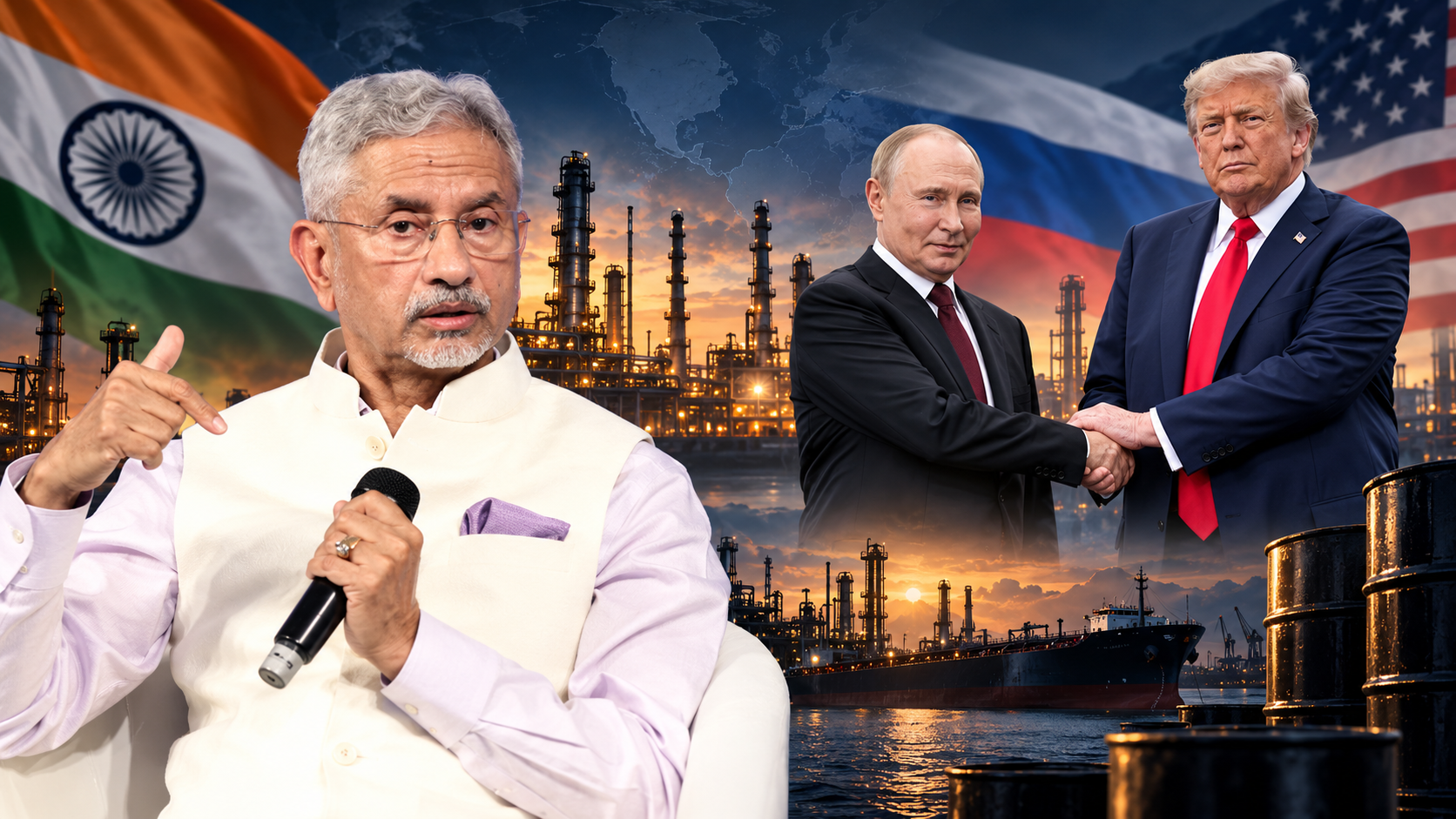
India’s External Affairs Minister S. Jaishankar has questioned the consistency of Washington’s approach to Russian oil, arguing that the United States, like other countries, acts to protect its own economic interests.
Speaking at the NDTV World Summit 2026, Jaishankar said decisions on energy supplies must account for market conditions, affordability and national interests. His remarks came amid shifting US policies towards Russian oil and continuing debate over India’s purchases of crude from Moscow.
According to NDTV Profit’s report on the summit, Jaishankar pointed to Washington’s decision to turn to Russian oil supplies to protect American consumers during energy-market disruptions. He argued that restrictions and sanctions can create market distortions and increase costs for consumers across countries.
Why is Russian oil at the centre of the debate?
After Russia launched its full-scale invasion of Ukraine in 2022, Western countries introduced sanctions aimed at limiting Moscow’s ability to finance the war. India, meanwhile, increased purchases of Russian crude, attracted in part by discounted prices and the need to secure reliable supplies.
New Delhi has consistently maintained that its energy decisions are guided by affordability, availability and national energy security. India’s position is especially significant because it relies heavily on imported crude to meet domestic demand.
Jaishankar has previously said that the United States itself had encouraged India to buy Russian oil in 2022 to help stabilise global prices. He has questioned why such purchases later became a source of trade friction between Washington and New Delhi.
What does this mean for India-US relations?
The disagreement extends beyond oil. India’s purchases of Russian energy have been linked to US tariff pressure and broader disputes over trade and sanctions. In September 2026, Jaishankar also raised India’s concerns with US Secretary of State Marco Rubio over American measures targeting countries that trade with Russia and Iran.
For New Delhi, the challenge is to protect access to affordable energy while maintaining a working relationship with Washington. For the United States, sanctions remain a tool of pressure on Russia, although energy-market disruptions can create competing domestic economic priorities.
The changing policy environment illustrates how energy supplies have become closely connected to trade negotiations, foreign policy and national security.
India’s balancing act
Jaishankar’s message reflects India’s longstanding emphasis on strategic autonomy: the ability to make foreign-policy and economic decisions without automatically aligning with another power.
That approach does not mean India and the United States must disagree on every issue. Both countries continue to engage on trade and other strategic priorities. However, differences over Russian oil demonstrate that cooperation does not eliminate competing national interests.
The Brief Social takeaway: The Russian oil debate is about more than where countries buy fuel. It highlights the tension between sanctions, energy affordability and national interests. Jaishankar’s argument is that India’s energy choices should be understood in the same practical terms that major powers apply to their own decisions.