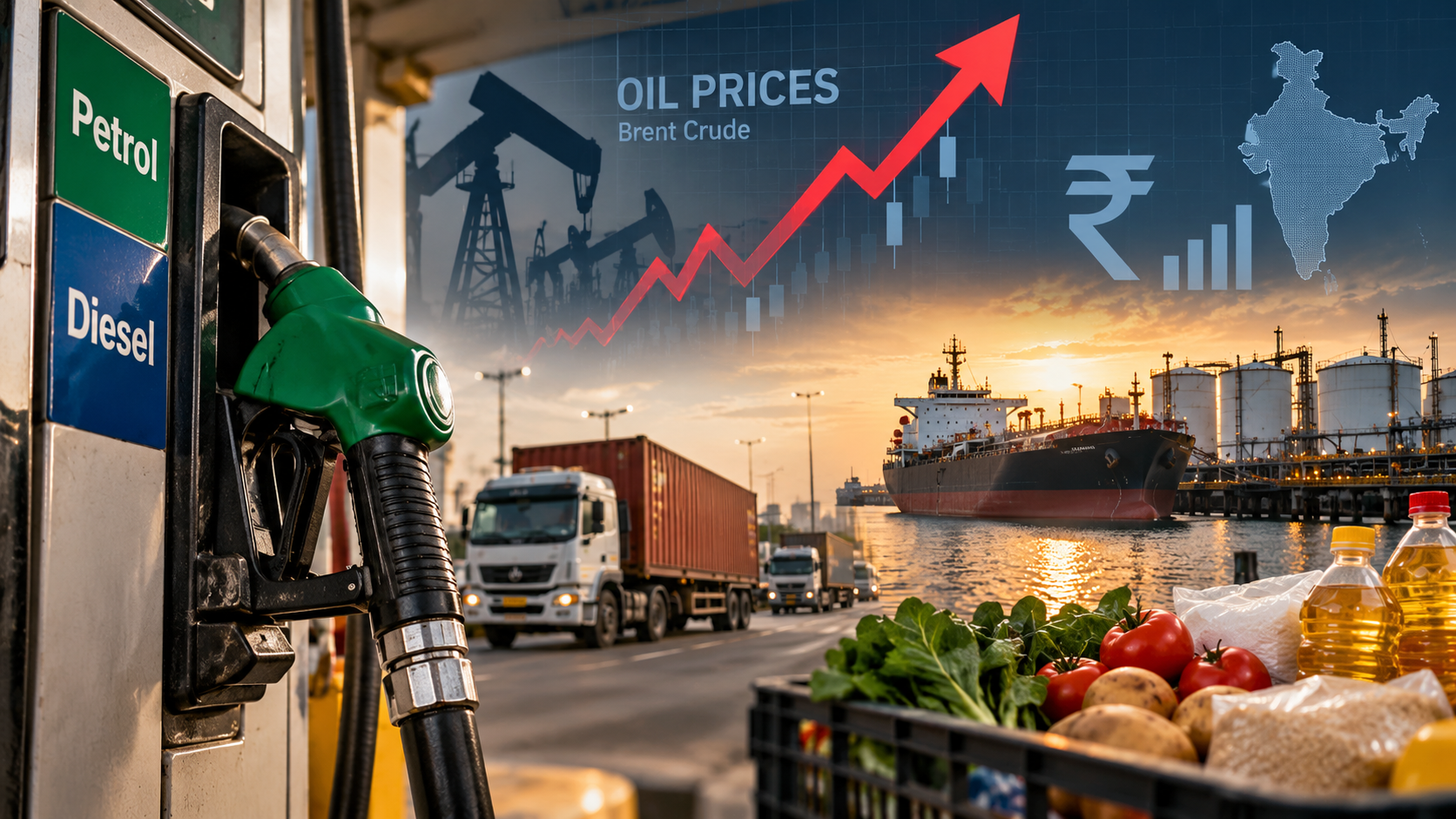
Global oil prices are rising, putting renewed pressure on India’s economy and raising concerns about the cost of transporting goods, running businesses and managing household expenses.
On 19 October 2026, Reuters reported that Brent crude had briefly crossed $110 per barrel amid global energy-market uncertainty. The report also highlighted pressure on the Indian rupee, which settled at ₹94.96 against the US dollar on Friday, 16 October.
Why Does Rising Oil Matter to India?
India imports more than 85% of its crude oil requirements, making the country vulnerable to changes in international oil prices. When imported oil becomes more expensive, the country may need to spend more to meet its energy needs.
A weaker rupee can add to this pressure because importers need more rupees to purchase oil priced in dollars.
From Fuel Costs to Food Prices
The impact does not stop at petrol pumps.
Diesel powers many trucks, agricultural machines and other vehicles that move goods across the country. If fuel and shipping costs increase, transport companies may face higher operating expenses. Businesses can then pass some of those additional costs on to customers.
That means groceries, vegetables, construction materials and other everyday products could become more expensive over time. However, the extent of the impact depends on domestic fuel prices, government policies, supply conditions and businesses’ ability to absorb higher costs.
What Do the Latest Inflation Figures Show?
India’s wholesale inflation rose to 11.39% in September 2026, according to government data reported by Reuters on 14 October. Higher oil prices were among the factors behind the increase.
Separately, official data showed retail inflation at 5.54% in September, while food inflation reached 7.74%. These figures reflect broader price pressures and should not be attributed to oil prices alone.
What Should Consumers Watch?
For households and businesses, the key indicators are domestic fuel prices, transport charges, food prices and future inflation data. A sustained rise in global oil prices could increase pressure on costs, although the final effect on consumers is not automatic.
The Brief Social takeaway: Oil prices are not just an energy-market story. For an import-dependent economy like India, they can influence the cost of moving goods, running businesses and managing everyday expenses.
Sources
The Brief Social Desk | Big stories. Briefly explained.